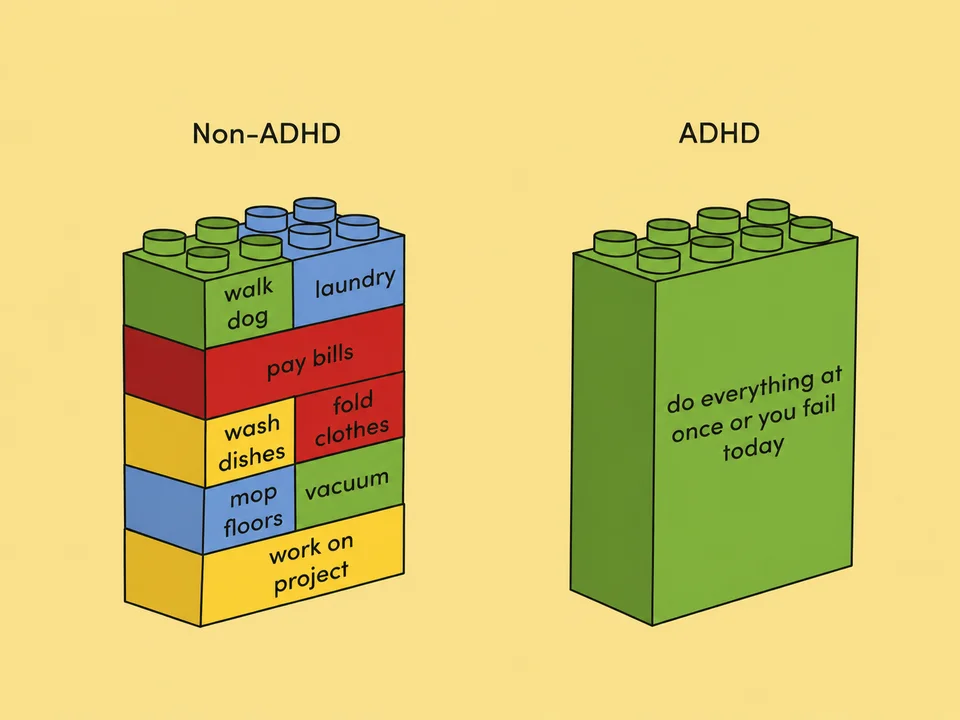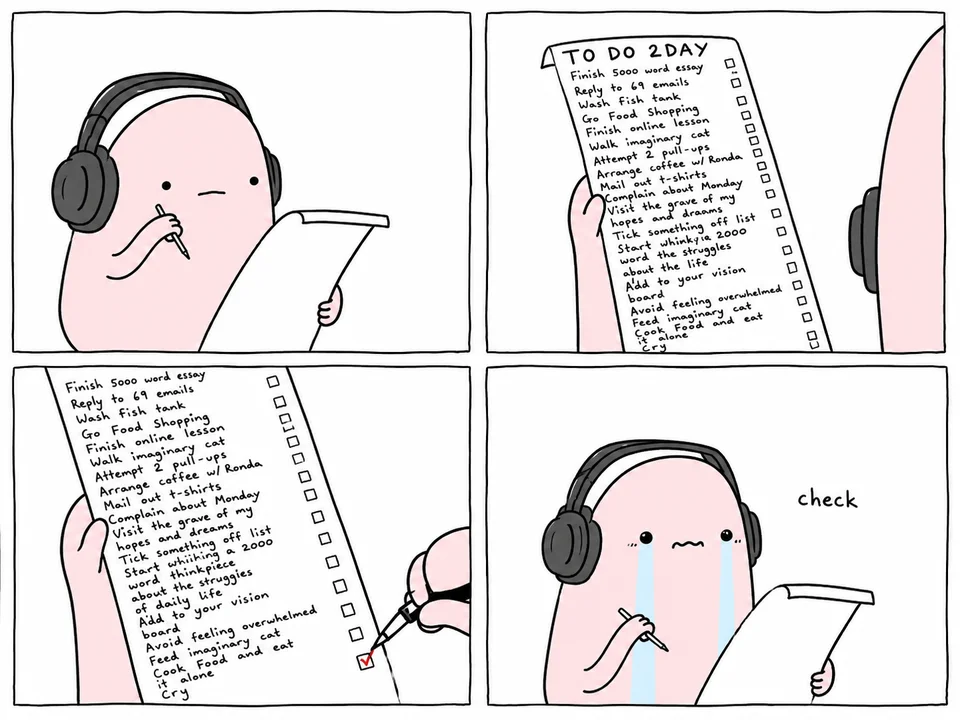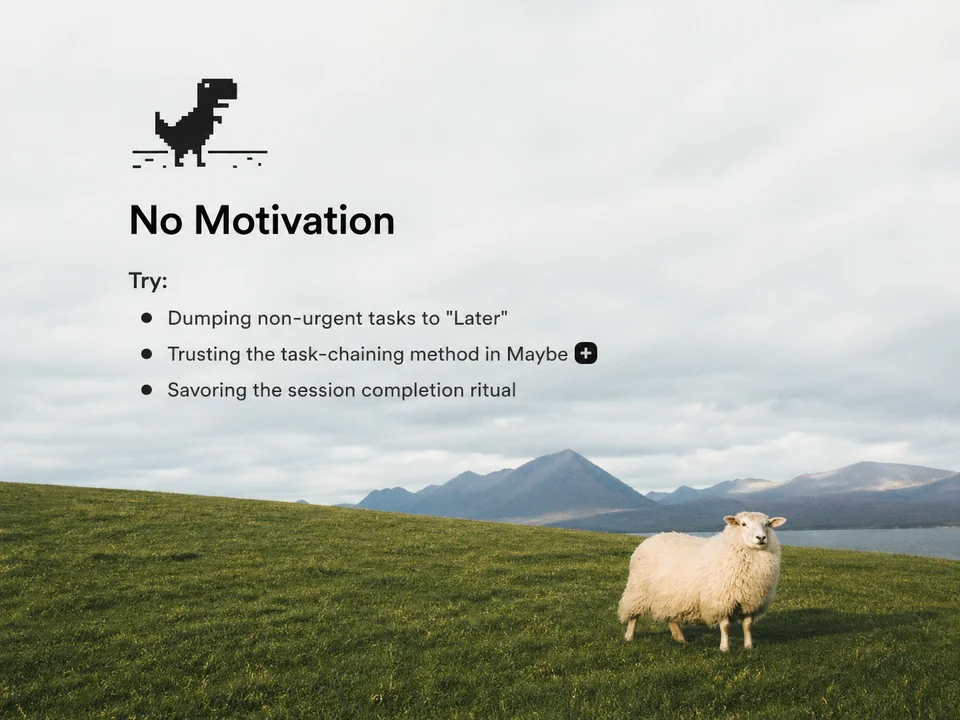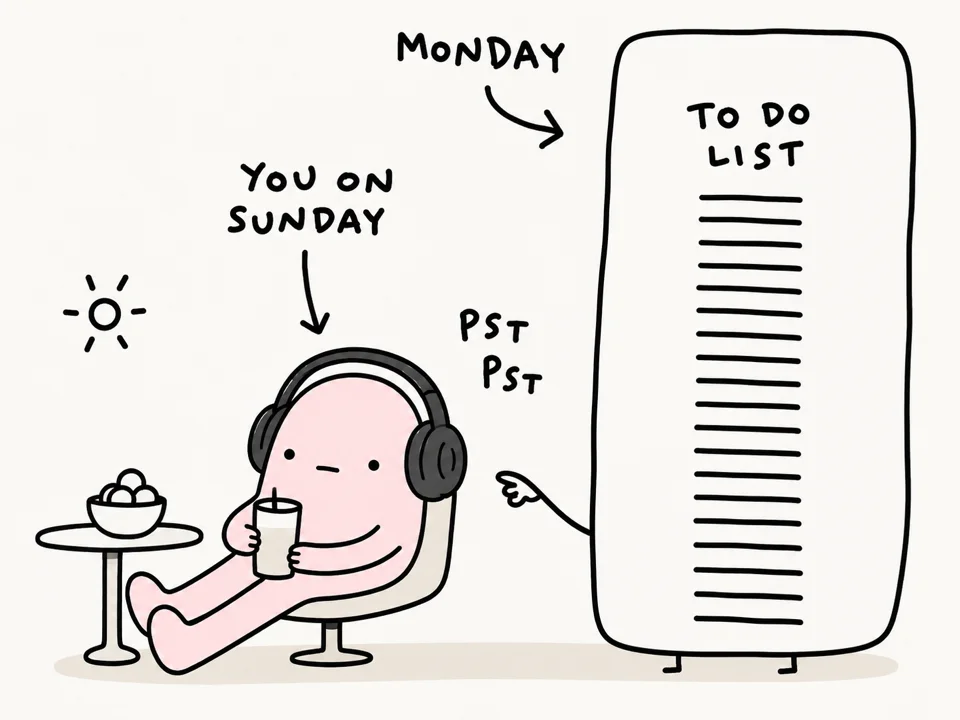
Morning anxiety rarely comes from the volume of work. More often it's the feeling that everything is urgent and you don't know where to start. You spend your energy not on tasks, but on endless choosing. Maybe collapses that choice into five minutes: open the app, compare tasks a few times using the FVP method, and walk away with a clear chain for the day.
7:40 — One list, no folders or tags
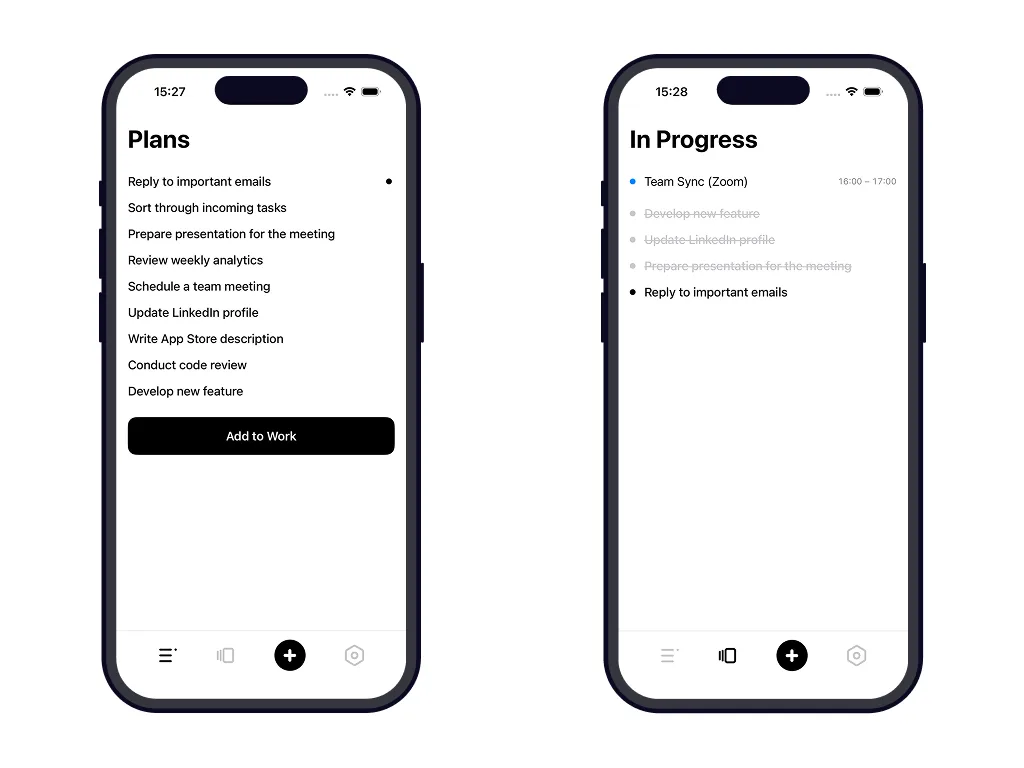
You open the Plan view — all tasks in a single column. No folders, no tags. Just a list: yesterday's leftovers, today's tasks, a long-overdue idea you've never gotten around to.
Fifty items at once is overwhelming. So you don't look at all of them at once. You start building a chain.
7:41 — Build your FVP chain in two minutes
Take the first task as your anchor. Move down the list and at each next task ask yourself one question: do I want to do this right now more than what I've already chosen?
Yes — mark it. No — skip it.
"Reply to Sarah": yes, more than the report. Mark it.
"Book the dentist": no, it can wait. Skip.
"Draft the presentation outline": yes, more than Sarah's email. Mark it.
A minute later you have a chain of three to five tasks. No priority matrices. You just compared two tasks a handful of times and chose. The brain does this effortlessly.
7:43 — Move to In Progress
The marked tasks move to the In Progress view. A separate screen — just your chain in FVP order: from the last chosen to the first. The other forty tasks are gone. There are four lines.
Calendar events sit above the tasks. 9:00 standup. An hour to go — enough for the presentation outline and Sarah's email. The dentist and the report will go into the afternoon window. You haven't forgotten them. You've intentionally deferred them.
7:45 — Put down your phone and start
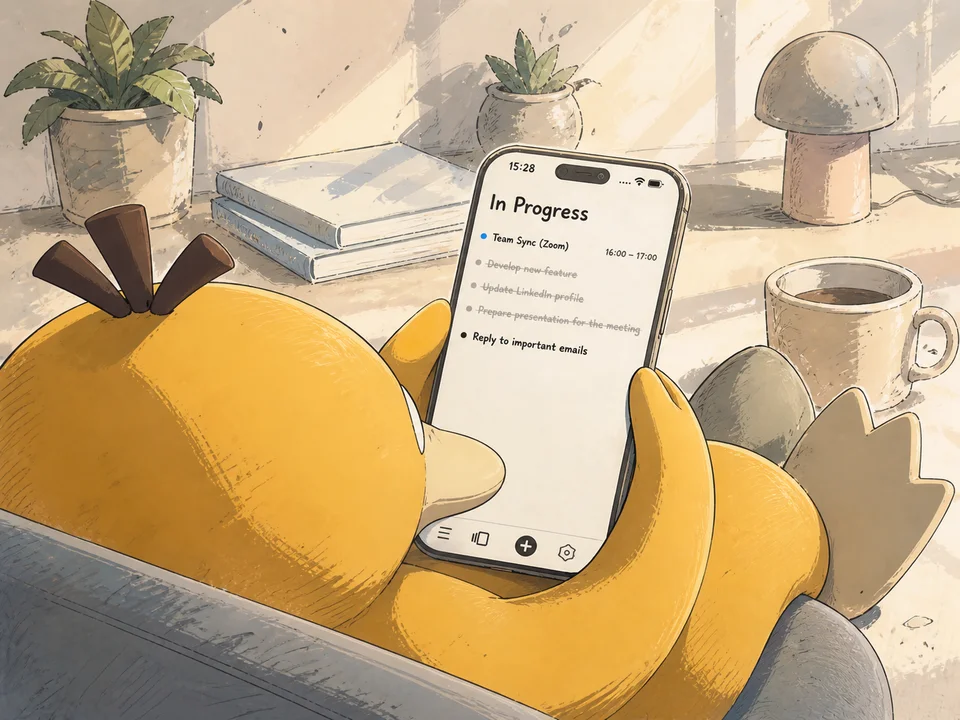
Five minutes gone. You put down your phone and start the first task. You don't second-guess the choice. You made the decision yourself — calmly, not under deadline pressure.
In the evening, you tap End Session. The phone responds with a haptic click and a sound like a completed payment. Your brain reads it as: done. A small reward for closing out a batch of work.
Why a morning ritual with Maybe works
The FVP method removes the most energy-draining part of the morning — choosing between equally urgent things. Instead of weighing ten tasks at once, you compare just two each time. That's something the brain handles without effort.
It's not the difficulty of tasks that paralyzes. It's the inability to choose between them.
Five minutes of planning creates one clear direction for the next few hours. After that, all that's left is the work itself.
Frequently Asked Questions
What is the FVP method and how does it work in Maybe?
FVP (Final Version Perfected) is a time management method by Mark Forster. Instead of ranking priorities, you compare tasks in pairs by answering one question: "Do I want to do this right now more?" Maybe builds this algorithm into its interface: you mark tasks with dots and the app assembles them into a working chain.
How long does morning planning in Maybe take?
Around 3–5 minutes — just enough to move through the list with the FVP question and send your chosen tasks to In Progress. After that, the screen shows only your chain for the day, with everything else hidden.
What if I don't finish all the tasks in my chain?
Unfinished tasks stay in your list and roll into the next session. You can end a session at any time — Maybe saves your progress and resets the In Progress state. Nothing is lost.
Does Maybe help with anxiety and ADHD?
FVP works especially well when executive function is a challenge. It replaces abstract decisions ("which is more important?") with a concrete comparison of two tasks right now. This reduces cognitive load and gives you a sense of control from the very first minutes of the day.
I built Maybe for exactly these five morning minutes. Open your list, answer one question a few times — and you have a chain for the day. Try it in the browser right now, or download it on iPhone if you prefer working from your phone.