Most task managers work great for people with linear thinking. For everyone else — especially those with ADHD or a tendency toward procrastination — they tend to become graveyards of abandoned plans. The problem isn't willpower or a lack of discipline. It's how these tools are fundamentally designed.
Why the Classic Top-Down List Creates Paralysis
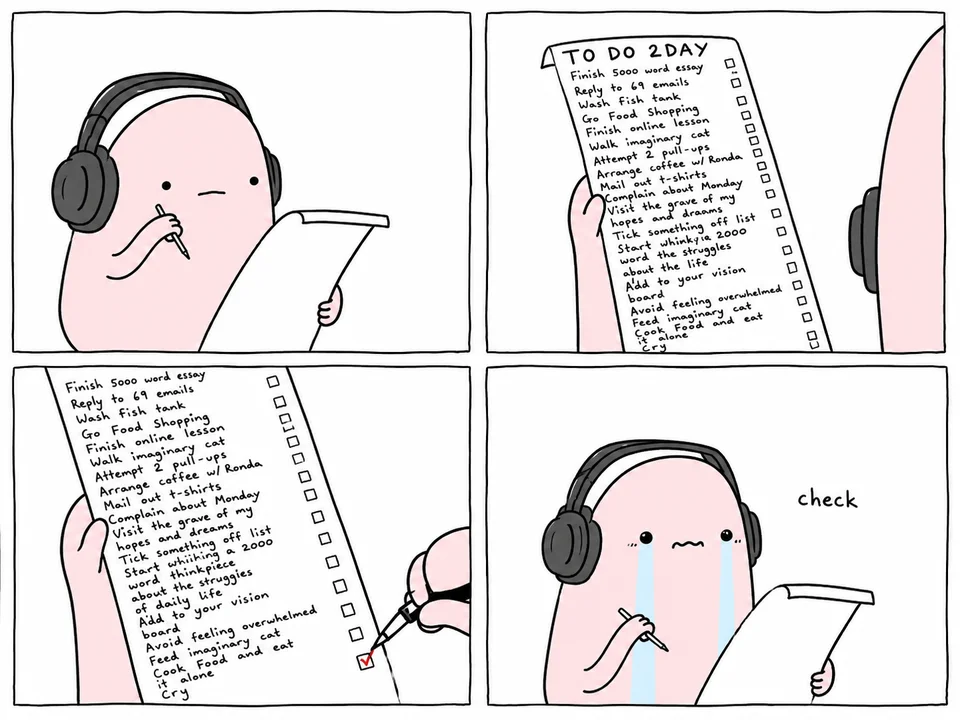
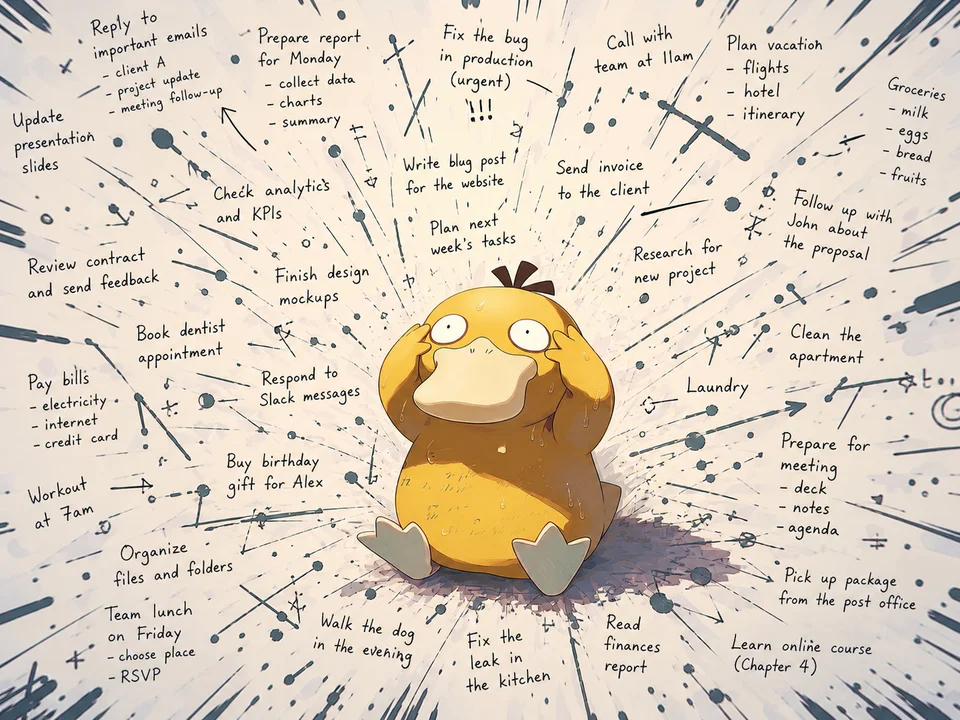
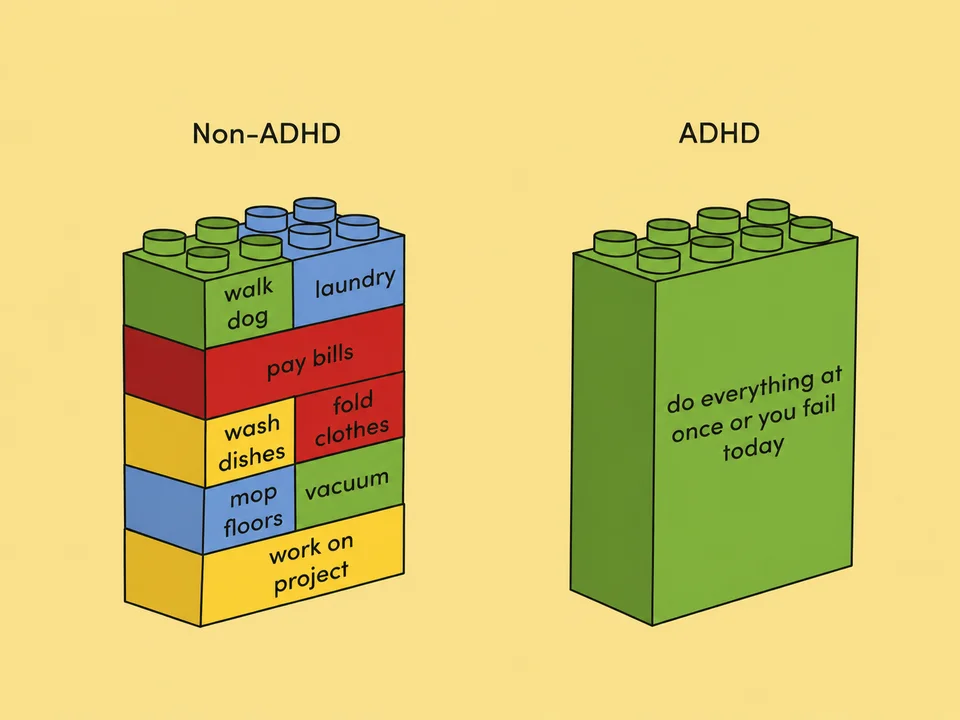
Most apps push you to work linearly — top to bottom, most important first. In practice, a long list triggers choice paralysis. Instead of concrete next steps, your brain sees an overwhelming pile and takes the path of least resistance: close the tab and check social media.
Even if the top item is "objectively most important," you might simply not have the internal energy for it right now. The result? Nothing gets done.
Decision fatigue compounds this. Every task you scan past requires a micro-decision — urgent or not? hard or easy? — and that burns through mental resources before you've even started. We explored why long lists work against the brain in detail in why your task manager became a graveyard of tasks.
The Productivity Illusion: Folders, Tags, and False Structure
Modern task managers offer powerful tools: projects, sub-projects, priority levels, custom filters. It's easy to fall into the trap of spending more time maintaining the system than actually using it.
A perfectly structured Notion workspace you're proud of but never work in isn't productivity — it's procrastination in disguise. For an overloaded brain, complex hierarchy is an additional source of stress. You spend energy categorizing a task correctly instead of just doing it.
The Missing Piece: Dopamine
When you mark a task done in a typical planner, it goes grey and gets a strikethrough. For a brain chemistry that desperately needs dopamine, that's not enough. Without a tangible reward for completing an action, motivation to return to the list fades quickly.
The FVP Method: Intuitive Choice Instead of Rigid Rules
The real breakthrough is Mark Forster's FVP method (Final Version Perfected). The core idea: keep one flat list — no sorting, no drag-and-drop reordering — and choose what to do through pairwise comparison. You can read the full mechanics of FVP here.
The quick version:
- The first task on your list becomes the initial anchor — you mark it regardless of how you feel about it.
- You look at the next task and ask: "Do I want to do this one more than the one already marked?"
- If yes — it becomes the new anchor. If no — skip and move down.
The result is a chain of tasks chosen based on your current state, worked in reverse order. You're negotiating with your own energy level instead of fighting it.
Focus and Proper Reward in Maybe
This principle is the foundation of the Maybe app. To avoid overwhelming the brain with a backlog, the full plan and what you're doing right now are kept separate. You build a FVP chain, move 3–5 tasks into "In Progress" — and all the visual noise disappears.
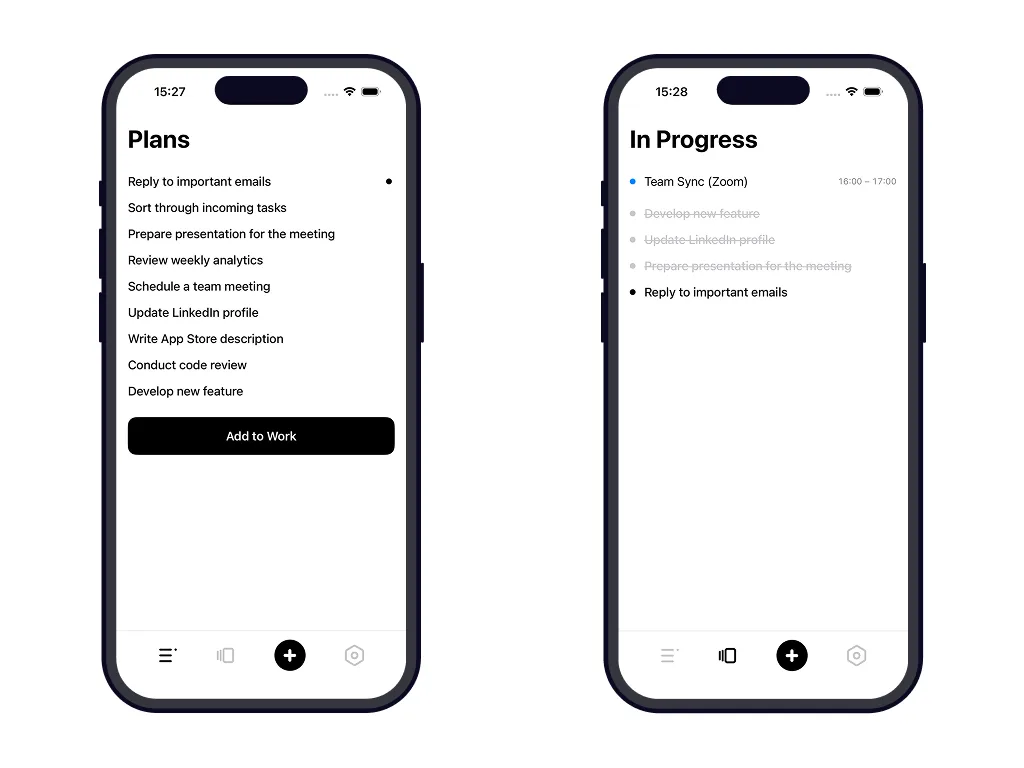
The difference between 50 tasks in front of your eyes and three is the difference between "I can't start" and "I'm already doing it."
Special attention went into the feedback loop. When you close a chain of tasks, Maybe plays the Apple Pay success sound and delivers a clear haptic response. This creates a positive pattern: finish your tasks, get an immediate emotional hit. The brain learns quickly, and working through the list starts to feel genuinely good.
Instant Capture
If there are too many steps between a thought appearing and getting it written down, the idea simply disappears. Maybe is built for the fastest possible capture: you can voice-dictate a stream of thoughts or photograph a handwritten list, and the built-in AI will parse the text and turn it into clear, actionable tasks. No required fields, no manual tags, no date picking. The shorter the path from idea to record, the more ideas you actually keep.
In Summary
Trying to fit yourself into the mold of strict hierarchical planners often leads to burnout — because they were designed for a different type of mind. For anyone who struggles to maintain focus, a system needs different principles:
- Intuitive task selection instead of rigid top-to-bottom movement
- A single flat stream instead of complex folder architecture
- Limited focus on 3–5 tasks instead of visual noise
- Tangible reward for each completed block of work
- Instant idea capture without extra clicks
FVP handles the first point. A well-designed interface handles everything else. I built Maybe not as another planner for people with perfect discipline, but as a tool for real humans — and the most satisfying part is that when you stop fighting your own perception and start working with it, you actually get far more done.
Frequently Asked Questions
Why don't classic task managers work for ADHD?
Most task managers are built for linear, top-down thinking — which directly conflicts with how ADHD brains work. Long lists trigger choice paralysis, complex structures burn mental energy on system maintenance instead of actual work, and the lack of real dopamine feedback makes returning to the list feel pointless. The tool itself creates the resistance.
What is the FVP method and why does it help with ADHD?
FVP (Final Version Perfected) is Mark Forster's method. Instead of forcing you to start at the top of a list, it asks one simple question for each pair of tasks: "Do I want to do this one more right now?" This replaces obligation with genuine readiness, removing the stress response that blocks action in ADHD brains.
How many tasks should I work on at once?
Research on working memory and cognitive load suggests 3–5 items is the sweet spot. More than that, and you're managing a list instead of doing work. Maybe enforces this automatically — when you start a session, only your selected tasks are visible. Everything else is out of sight.
Does Maybe work without a subscription?
The core features — including the FVP selection flow and In Progress mode — are available in the free version. AI task capture requires a subscription. You can start using it today without a credit card.
Maybe was designed from the ground up for people who struggle with traditional task managers. The FVP selection flow, the focused work mode, the instant AI capture — all of it exists to remove friction between you and actually getting things done. Try it in the browser right now, or download the iPhone app if that's where your day lives.