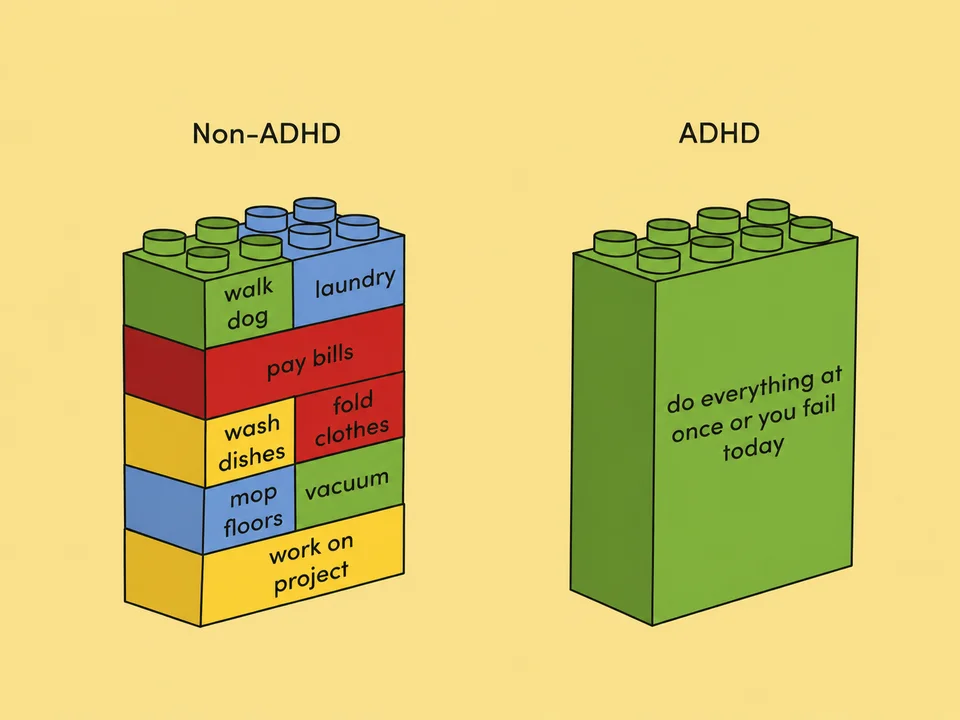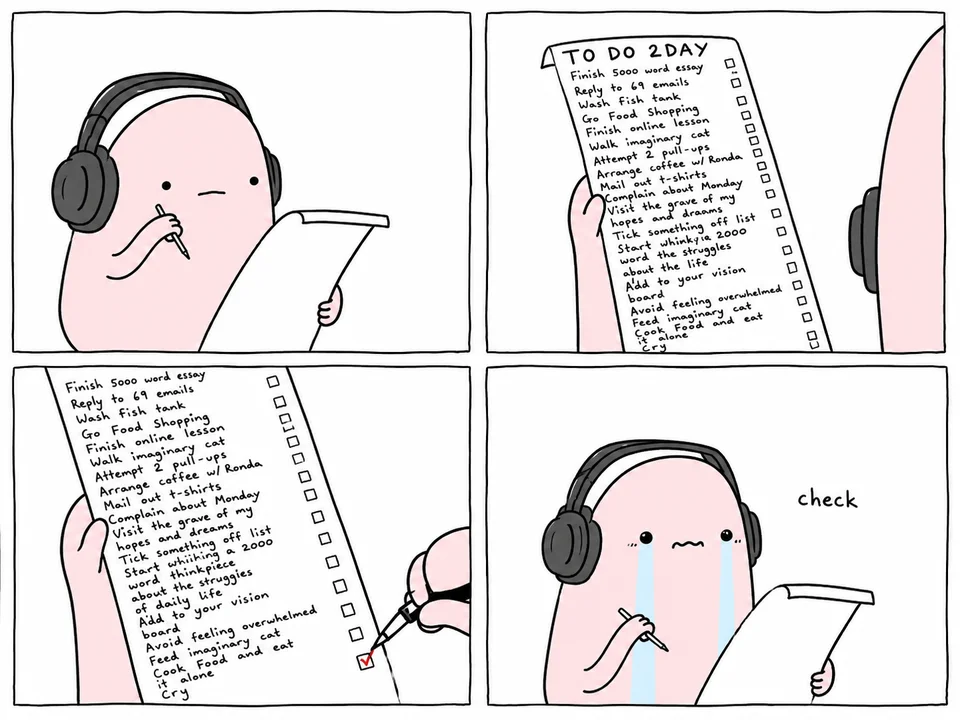
Procrastination isn't laziness. It isn't a willpower problem either. It's a signal that something in your planning system is broken. When an important task sits untouched on your list for weeks, your brain isn't sabotaging you — it's honestly telling you it doesn't know where to begin. The anchor method gives a concrete answer to the question most productivity systems never ask: how do you actually start?
Why "Do the Most Important Thing First" Usually Fails
Almost every productivity book gives you the same advice: tackle the most important task first thing in the morning. Eat the frog. The rest will follow.
It sounds logical. In practice, it often leads to paralysis.
The "most important" task is almost always the most vague or the most intimidating one. Looking at it at 9 a.m. — with no momentum, no warmup — your brain simply refuses to engage. So you check email, reply to messages, handle other legitimate things. Anything to avoid the main event.
The day ends and that frog is still sitting there, untouched.
Traditional systems are great at sorting tasks by priority, but they ignore the entry point. They tell you what to do — but not how to make yourself start.
Mark Forster's Counterintuitive Idea
Mark Forster is a British expert who spent decades studying one question: why do people fail to do the things they actually consider important? His method — FVP (Final Version Perfected) — is built on an idea that seems strange at first.
Always anchor your list to the oldest task.
Not the most urgent one. Not the one on fire right now. The one that has been sitting in your list the longest. Forster calls it the anchor.
How the Anchor Works in Practice
The anchor isn't a fancy label for "your most important task." It's a concrete reference point.
In FVP, you scan your list from top to bottom and ask yourself one question for each item: "Do I want to do this more than the last one I picked?" If yes, it becomes the new reference point. If no, you keep going.
This builds a live sequence based on your actual readiness right now — not on artificially assigned priorities.
The interesting thing happens with the anchor itself. The oldest task almost never beats the newer, shinier ones in the comparison. And that's perfectly fine. It doesn't disappear — it just sits at the top as a reference for every subsequent choice. That shift in framing changes everything about how work feels.
This is exactly how Maybe works. The app walks you through the comparison one question at a time, so you never have to hold the entire list in your head. You answer one simple question, and by the end you have a focused session queue — chosen by desire, not obligation.
Momentum Beats Willpower
Picture this: you've lined up a chain of tasks and started with the one you wanted most. You close it, then the next one, then another.
By the time you reach the anchor — that old, heavy task you've been avoiding — you've already racked up a few wins. You have momentum. You're in flow. You feel the pull of completion.
And the task that seemed impossible at 9 a.m. is suddenly just the next logical step.
There's no magic here — it's pure neuroscience. A brain that's already received a hit of dopamine from a few quick wins is in a completely different state than one being forced to storm a fortress first thing in the morning.
Forster's key insight: motivation is usually a product of action, not its cause. You can't summon it by sheer willpower, but you can build it through the right sequence of steps.
Why Old Tasks Are a Special Signal
When something has been sitting in your plans for several weeks, that's not random. Either the task is more complex than it appears, or it's triggering internal resistance you haven't consciously recognized yet.
These items become accumulated debt to yourself. Even when you try not to think about them, they create background noise and drain energy.
The anchor makes that problem visible. It says: "We'll get to this — on your terms, when you're ready."
How to Stop Turning Your Task List into a Graveyard
Most task managers eventually become the place where tasks go to die. We add new things faster than we clear old ones, and eventually stop looking at the bottom of the list just to avoid the guilt.
The anchor mechanic breaks that pattern. It keeps old items on the surface, surfacing them honestly and without pressure. Sometimes this helps you realize a task has simply lost its relevance and is ready to be deleted. That's a great outcome too — making a conscious decision instead of endlessly deferring it.
In Maybe, those long-sitting tasks stay visible during every planning session. Nothing old sinks unseen to the bottom of an infinite list.
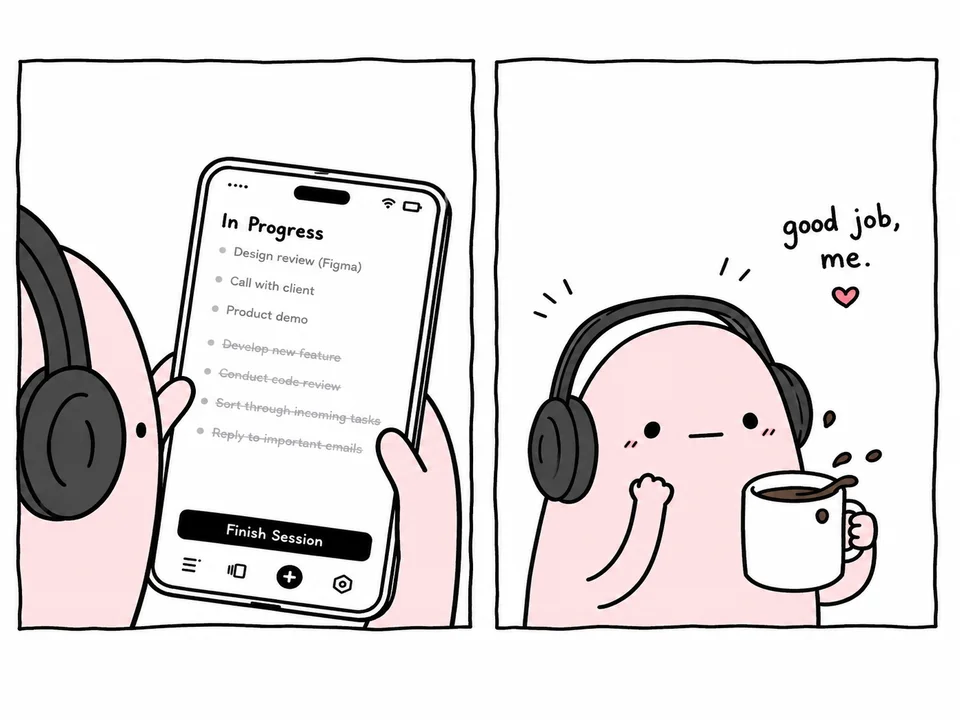
Why Your Brain Actually Works Better This Way
When you start consistently closing old tasks and following through on ideas you once wrote down "for later," something important shifts: you start genuinely trusting your system.
The problem with most task lists is that we don't actually believe in them at a subconscious level. We know there's a pile of broken promises to ourselves in there, and the brain starts treating the planner like a burden.
But as soon as you see tasks actually moving — and old items actually disappearing — the brain gets a signal: "This works. It's safe here." That's when creative capacity turns back on. A reliable system stops burning energy on anxious task-holding and frees the brain to generate more new ideas.
Bottom Line
Productivity isn't about iron discipline. It's about understanding how your brain works and building conditions where starting is easier than procrastinating.
The anchor method isn't about boxing yourself in. It's about making an honest deal with yourself. Try starting with the oldest thing. Not because some rule says you must — but because that task has been waiting long enough.
Frequently Asked Questions
What is the "anchor" in the FVP method?
The anchor is the oldest task in your list. In FVP, it serves as the reference point for every comparison: when choosing what to do next, you compare each candidate against the anchor. You don't have to do it first — the anchor simply ensures the system never forgets your long-overdue tasks.
Why is procrastination not a laziness problem?
Procrastination usually stems from vagueness or fear, not unwillingness to work. When a task is poorly defined or feels too large, the brain automatically avoids it — that's a protective mechanism, not a character flaw. A well-designed planning system lowers that entry barrier.
How does FVP actually fight procrastination?
FVP removes the need to make a hard willpower decision about where to start. Instead, you answer a series of simple yes/no questions — "do I want this more right now?" — and end up with a task chain chosen by internal desire. Starting with what you want is far easier than forcing yourself to tackle the heaviest item cold at 9 a.m.
What if the anchor is a task I no longer need?
That's a great outcome. Consciously deleting a task that's no longer relevant is a decision, not a failure. The anchor mechanic prompts regular review of old items so you can honestly choose: do it, reframe it, or delete it. This clears the list and reduces background stress.
Maybe builds the anchor method directly into the interface: during session planning, the app shows tasks one at a time and asks a single question — "do you want to do this now?" No complex priority systems, no guilt. Just an honest choice — and a ready-made task chain for the day.