To prioritize, you need to already know what matters most. But if you knew that, you'd have just done it. Mark Forster's FVP method breaks out of this trap by replacing evaluation with comparison. One question — and your task list arranges itself into an order you actually want to follow, not avoid.
Why Ordinary To-Do Lists Don't Work
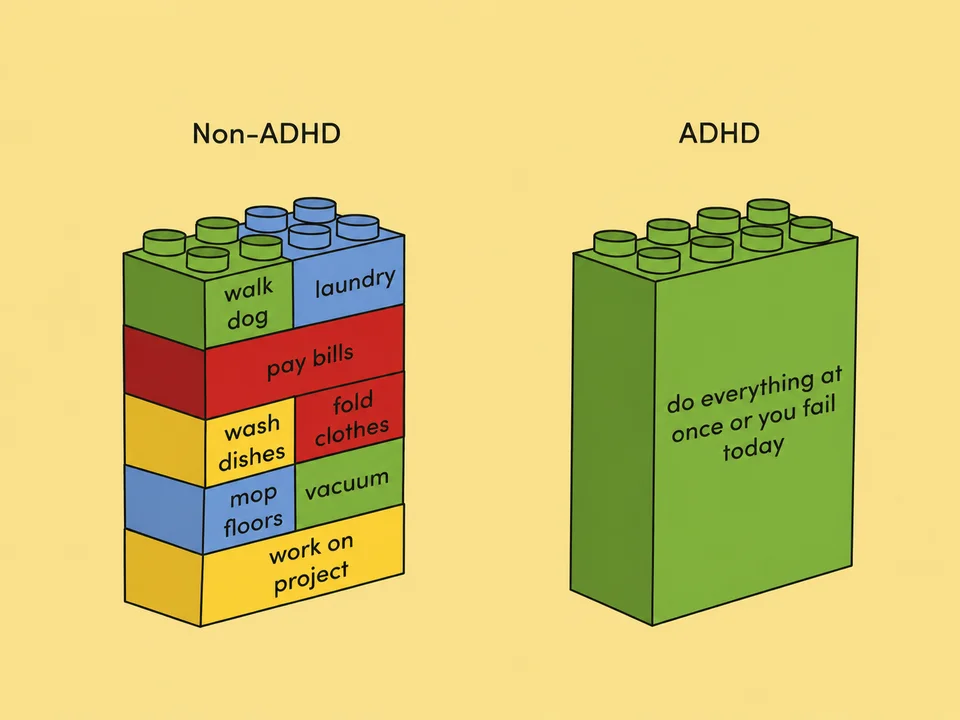
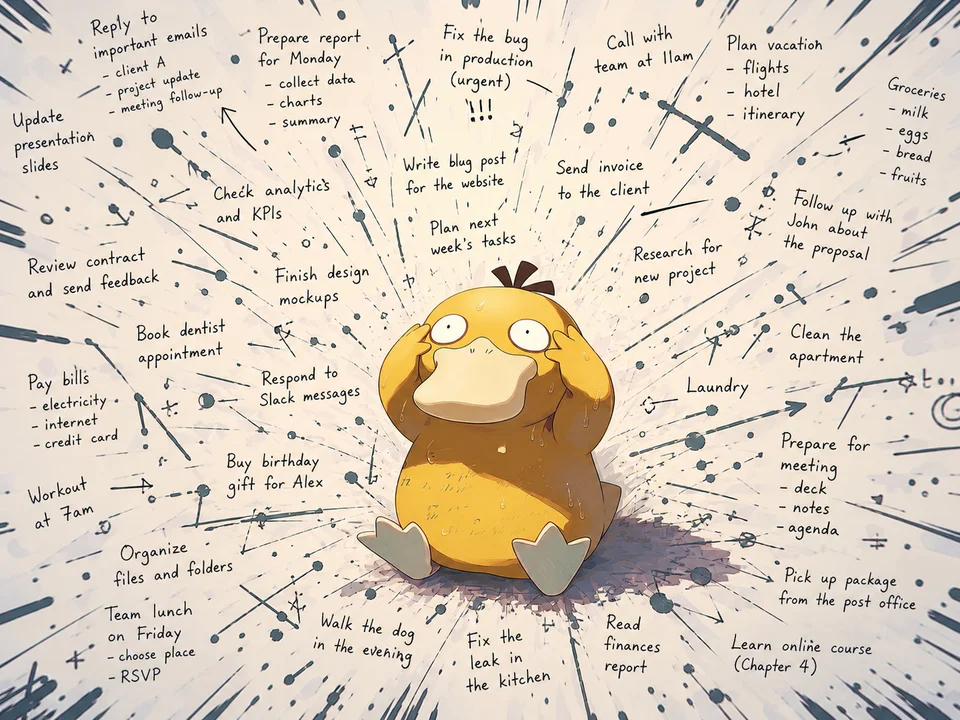
Picture a standard to-do list. Fifty items. You look at it and… do nothing. The brain simply isn't equipped to pick one task from fifty without stress. That's cognitive overload — it runs on neurobiology, not willpower.
The classic fix is prioritization. Label tasks by importance: A, B, C. Or use the Eisenhower matrix: urgent/important. Or some other system.
But here's the problem: to prioritize, you already need to know what's important. And if you knew — you'd have just done it. Prioritization just hands the responsibility back to you in a more complicated form.
Forster took a different path. He asked: what if instead of ranking tasks, you compare them?
The Genius of One Question
At the heart of FVP is one simple question:
"Do I want to do this more than the previous one — right now?"
Not "which is more important." Not "which is more urgent." Just — do I want this one more, right now.
Here's how it works in practice. You take the first task on your list as the starting point. Then you look at the second task and ask yourself the question. If yes — the second task becomes the new anchor. You move to the third, ask again. All the way down the list.
You end up with a chain of marked tasks. Not just "things to do today" — these are the tasks you yourself chose as the most desirable relative to everything else. You're not forcing yourself to work. You're following your own choice.
The list flips — and you start with the most wanted task, moving down the chain on a wave of interest, not compulsion.
Why This Is Psychologically Accurate
When you assign a priority — you're solving an abstract question. "How important is this task in the context of my whole project, life, career?" That's hard. The brain stalls.
When you compare — you're solving a concrete question. "This one or that one, right now?" That's easy. The brain answers instantly.
The difference lies in which part of your thinking you engage. Abstract importance evaluation requires working memory and taps the executive functions — exactly the ones that are depleted by the end of the day. Pairwise comparison works differently: it's an intuitive choice, fast and nearly effortless.
You're not overcoming resistance — you're going around it.
That's the core of FVP: instead of forcing yourself, you follow your own choice.
How This Looks in Maybe
I built Maybe around this method — because I use it myself every day.
You start with a Brain Dump: offload everything from your head into a single list with no sorting. Tasks, ideas, errands, calls — all of it. That alone clears your head.
Then FVP filtering. Maybe walks you through comparing tasks with a single swipe. No manual sorting required. The result is a chain of 3–5 tasks you genuinely want to work on right now.
Tap "Start Working" — and you only see those. No noise. No fifty tasks lurking in the background. Just what you chose.
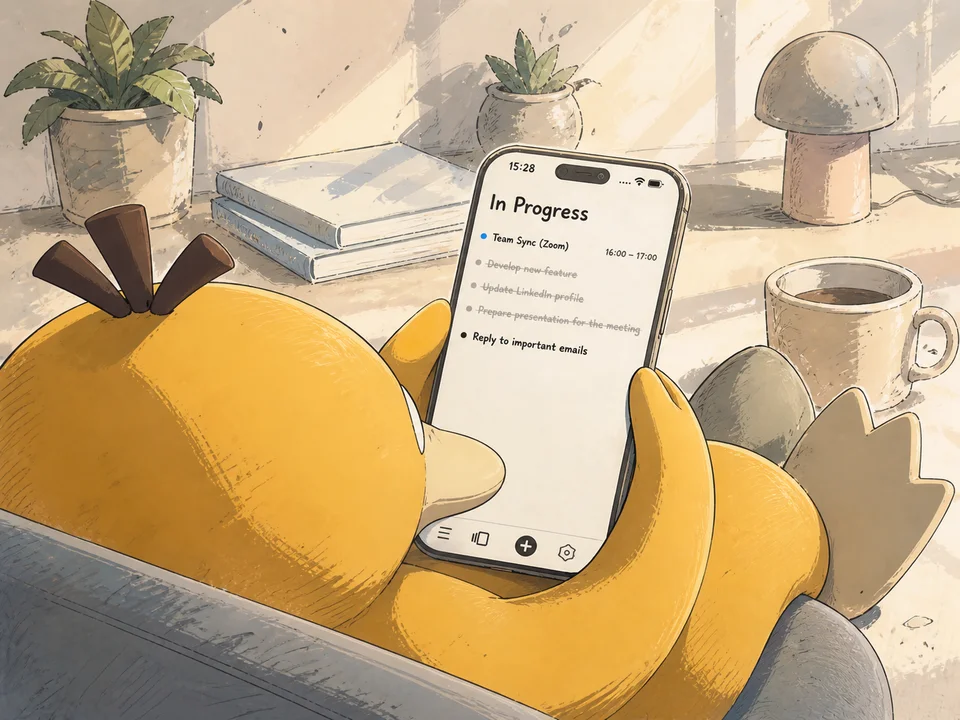
If a new idea pops up mid-session — you can dictate it by voice or photograph a handwritten note. The AI turns it into a properly formulated task and drops it into your list.
The Bottom Line
FVP works because it's honest: the brain picks tasks by desire, not importance — and the whole system is built around that.
Try running your list through that one question once. You'll probably be surprised how quickly you find the task you actually want to start with.
Frequently Asked Questions
What is the FVP method?
FVP (Final Version Perfected) is a time management method by Mark Forster. Instead of assigning priorities, you compare tasks sequentially, answering one question: "Do I want to do this one more right now than the previous one?" The result is a chain of tasks chosen by desire, not obligation.
How is FVP better than the Eisenhower matrix or A/B/C priority systems?
Prioritization requires abstract importance judgments — that's mentally expensive and drains quickly. FVP replaces it with a concrete pairwise comparison: "this one or that one right now?" That choice is intuitive and nearly effortless. The result: your energy goes into the work itself, not into fighting yourself to start.
What is procrastination from the FVP perspective?
From an FVP standpoint, procrastination is a signal that the task is framed wrong, or that your task-selection system creates too much resistance. FVP removes that resistance: you always do what you genuinely feel like doing right now, not what you feel you "should."
Do you need to run through the full FVP comparison every single day?
Not necessarily from scratch every day. Running through the list once in the morning or before a work session is usually enough to build a chain. If priorities shift mid-day, re-running is fast — comparisons take seconds, not minutes.
Maybe is built around the FVP method: Brain Dump, task comparison with a single swipe, and focus mode — all wired into the interface. Add an AI assistant for fast task capture and Apple Calendar sync to see your real windows between meetings. Try your first session and feel the difference between "I have to" and "I want to right now."