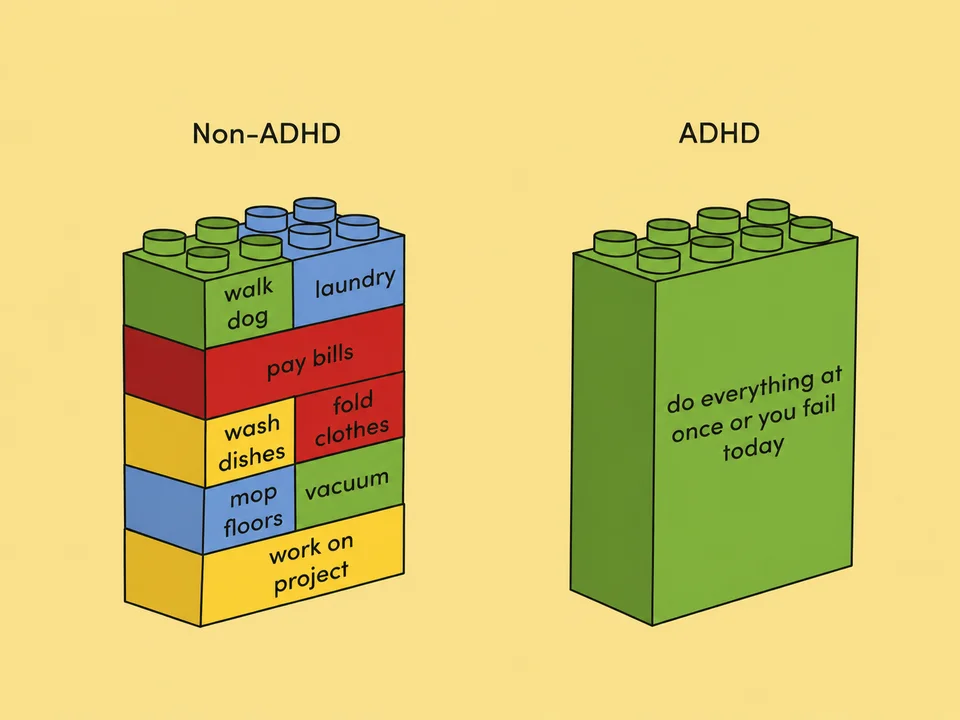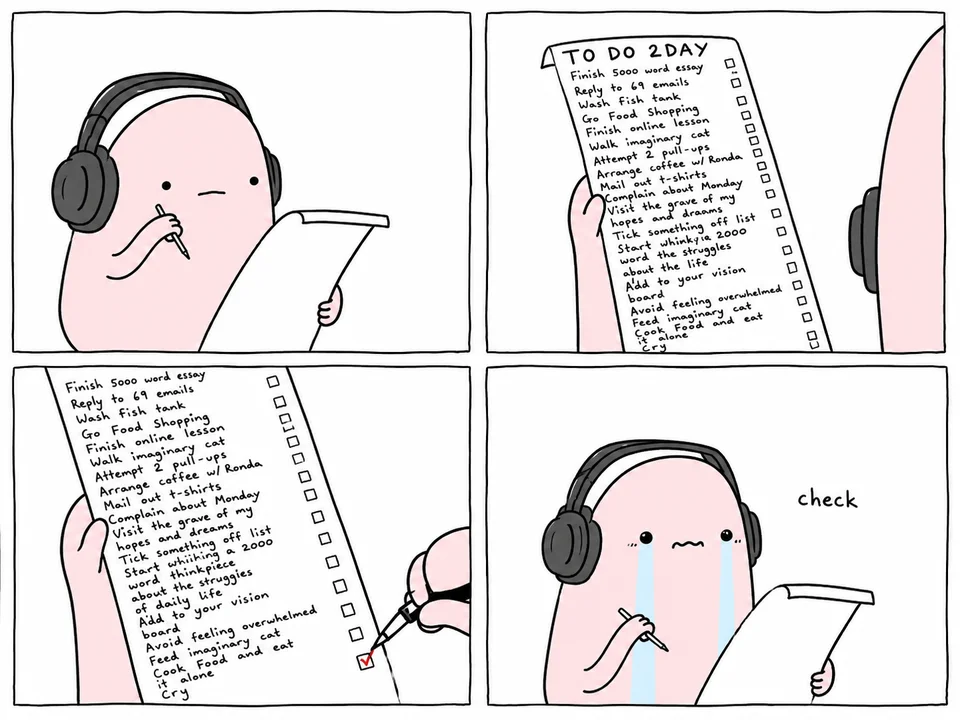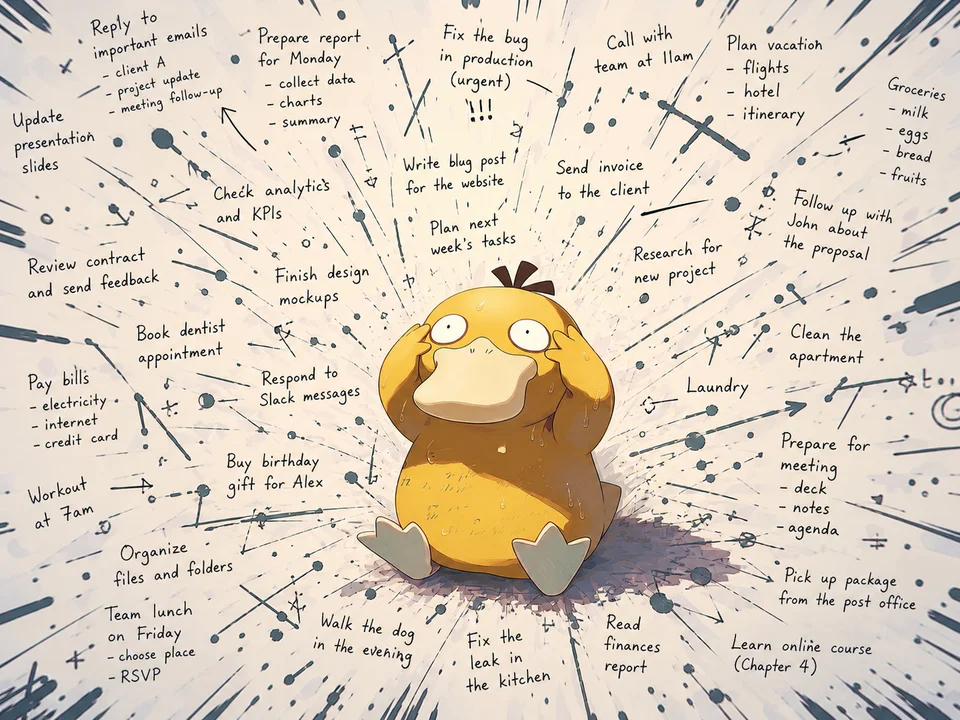
Classic to-do lists work great for robots — but they break against human psychology. Once your list grows too long, a productivity tool turns into a stress generator and procrastination trigger. The fix isn't willpower or a new color scheme for your cards. It's a fundamentally different approach to choosing what to do next.
Why Ordinary Lists Create Resistance
Sound familiar: you open your task manager, see an endless list of things to do today, and feel a wall of resistance instead of energy. The "check off from top to bottom" model creates an illusion of order while ignoring the one thing that actually matters — your inner focus at this specific moment.
The brain doesn't run on a schedule. It runs on interest. Every time you force yourself to do "the most important thing" instead of "what I actually want to do right now," you spend energy fighting yourself rather than doing the work.
Psychology Over Rigid Frameworks
Maybe is built around Mark Forster's FVP method (Final Version Perfected) — developed by an expert who spent decades studying the psychology of personal effectiveness. Instead of assigning priorities (A, B, C), FVP asks one question: "Would I rather do this task right now than the previous one?"
Here's the full flow.
Brain Dump
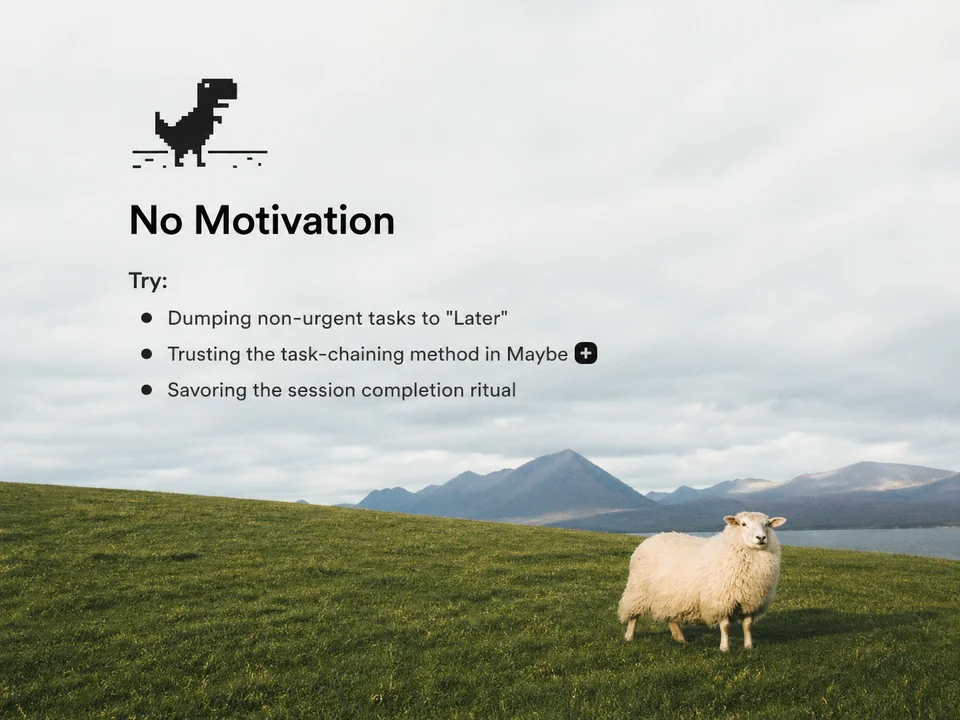
You offload everything — work tasks, errands, random ideas — into a single list with no sorting and no pressure. Anything that definitely doesn't need to happen today goes to a "Later" section, leaving you with a clean horizon.
Intuitive Filtering
Take the first task on the list and scan down. One question: "Do I want to do this one more right now?" If yes, that task becomes the new anchor. Step by step, you build a chain of tasks you actually feel like doing at this moment.
Focus Mode
Hit "Start Working" — the huge list disappears, leaving you face-to-face with 3–5 chosen tasks in the right order. You begin with the most desired task and move forward on a wave of natural momentum. No visual noise.
Technology That Handles the Routine
Maybe pairs the FVP method with modern tools so that even capturing tasks doesn't become a chore.
Intelligent AI assistant. Got a complex idea? Dictate it by voice or photograph a handwritten note. The AI extracts the core, fixes errors, and turns messy input into a clean "action → outcome" formulation.
Smart context. In "Working" mode, Maybe syncs with Apple Calendar. You see the windows between your meetings and can realistically gauge how much you can finish before the next call.
Dopamine completion ritual. Closing a task triggers haptic feedback and a satisfying sound. This small ritual builds the habit and reinforces a genuine sense of accomplishment — not the hollow feeling of just moving a card from one column to another.
The Bottom Line
Maybe is built for people who are tired of bloated productivity suites and endless card-shuffling. It lets you hand off task selection to the FVP method, the routine to AI, and keep for yourself the one thing that matters: the clean satisfaction of focused work.
Frequently Asked Questions
Why don't classic to-do lists work?
A standard list demands willpower — you force yourself to tackle "the most important" item at the top. This fights how the brain actually works: it focuses best when a task is genuinely interesting right now, not just because it's first in line.
What is FVP and how is it different from A/B/C priority systems?
FVP (Final Version Perfected) is Mark Forster's method. Instead of assigning priority levels, you compare tasks in pairs, asking "Would I rather do this one right now?" The result is a chain of tasks chosen by desire, not obligation. Your energy goes into the work itself, not into overcoming resistance.
What is a Brain Dump and why does it matter?
A Brain Dump means getting every task out of your head and into one list, without any sorting. While tasks float in your mind, they occupy working memory and create background stress. Once written down, you free up mental space for actual thinking and doing.
Is Maybe suitable for someone who has never used a task manager before?
Yes. Maybe is designed with no complex settings, tags, or priority levels. You start with a Brain Dump and immediately see results — no workspace setup tutorials required.
I built Maybe specifically to remove the friction between you and your task list. The FVP method, AI assistant, and calendar integration are built right into the interface — start your first session and feel the difference between "have to" and "want to."