The Eisenhower Matrix is a way to prioritize by splitting every task into four groups along two axes: importance and urgency. Urgent and important you do now, important but not urgent you schedule, urgent but not important you delegate, and not important and not urgent you simply cross out. The method is great at bringing order to an overloaded mind, but it has a weak spot that rarely gets mentioned.
TL;DR
- The matrix sorts tasks by importance and urgency into 4 quadrants: do → schedule → delegate → delete.
- The key one is quadrant two (important but not urgent) — it drives long-term results, yet it's always postponed.
- As a daily system it breaks: everything feels important, you have to redraw it, and it ignores your energy.
- The alternative is the FVP method: one list and the question “do I want this more than the previous task?”.
What the Eisenhower Matrix is
The method is credited to Dwight Eisenhower, the 34th U.S. president, who once quoted someone else's line: "I have two kinds of problems, the urgent and the important. The urgent are not important, and the important are never urgent." Stephen Covey later popularized the idea in The 7 Habits of Highly Effective People, and it became a 2×2 grid.
Two axes — importance and urgency — define four quadrants:
The core idea: most people live in the first and third quadrants — constantly putting out fires and reacting to other people's urgency. But the real results in life come from the second quadrant — important, non-urgent tasks that always get pushed to the bottom.
Why the second quadrant decides everything
The second quadrant holds almost everything that changes your life over the long run: health, learning, relationships, planning, personal projects. None of it has a deadline, so none of it ever shouts. It's easy to push to tomorrow — for years.
This is also where the main trap hides. A neglected second-quadrant task eventually migrates into the first. The checkup you skip one day becomes a trip to the ER. The skill you never learned turns into a missed promotion — and now it's urgent. The project you kept postponing becomes a frantic rush before the deadline. In other words, half the fires in quadrant one are former quadrant two that you didn't get to in time.
Why does the brain keep choosing the urgent? In 2018, researchers Zhu, Yang, and Hsee described the "mere urgency effect": in their experiments, people consistently took on urgent but low-value tasks instead of important, more rewarding ones — even when they knew in advance the payoff for the important task was higher. Urgency pulls attention by itself, regardless of the value of the outcome.
The takeaway is simple: time for the second quadrant has to be protected deliberately, because nothing external will flag it for you. A deadline announces itself. Important-but-not-urgent never will.
How to use the matrix, step by step
- Write down every task in one list — no sorting, just dump it out of your head. This, by the way, is the one step that reliably works in any planning system.
- Ask two questions about each task. Does it move me toward an important goal? Does it have a real deadline? The first answer sets importance, the second sets urgency.
- Place each task into one of the four quadrants.
- Act by the quadrant rule: quadrant one — do it, quadrant two — block a specific time in your calendar, quadrant three — hand it off, quadrant four — cross it out without regret.
The classic beginner mistake is confusing importance with urgency. A phone ringing right now feels important, when it's really someone else's urgency from the third quadrant. The matrix exists precisely to break that reflex.
Where the Eisenhower Matrix breaks down
The matrix explains priorities beautifully on paper. The trouble starts when you try to use it every day.
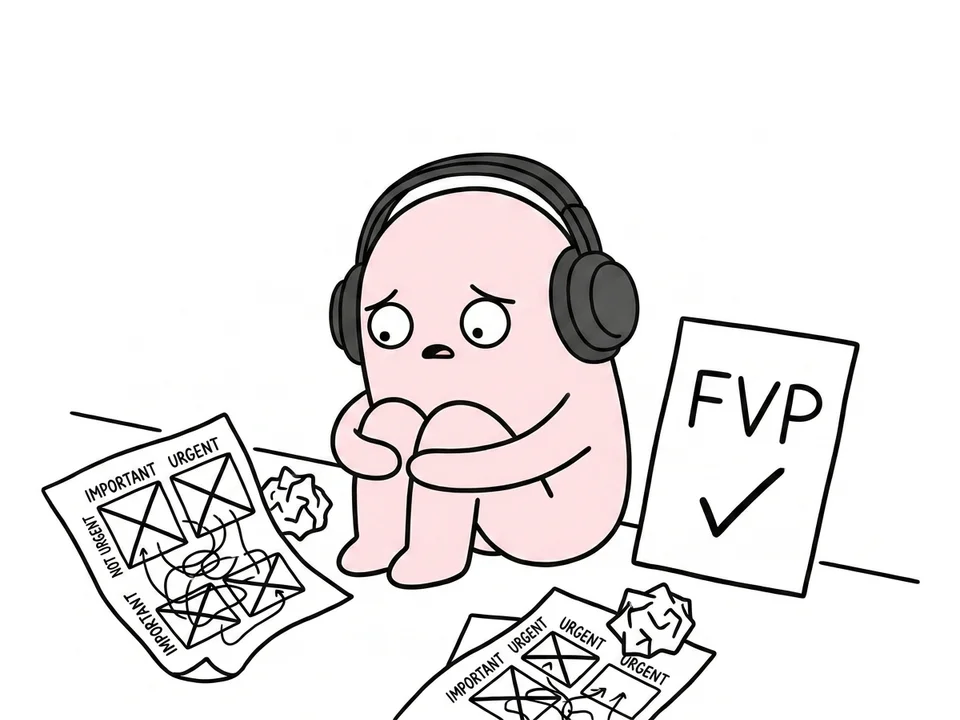
Almost everything feels important and urgent. Once you sit down to sort, the first quadrant swells, and the "this is more important than that" decision still has to be made by hand — the matrix doesn't make it for you. It sets a frame, but it doesn't answer which of ten tasks in the same quadrant to pick right now.
It's one more system to maintain. Redrawing the grid every morning is something few people keep up for more than a week. For the same reason, the GTD method doesn't work for most people — maintaining the system becomes a separate job on top of the real work.
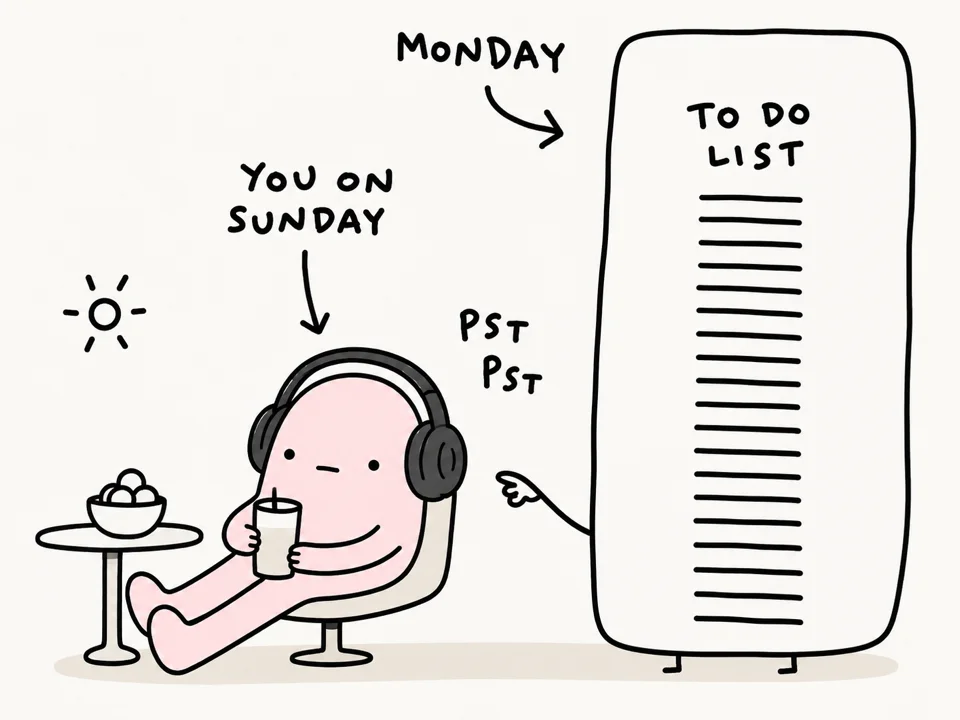
The matrix ignores your state. Importance and urgency are static; your energy isn't. On Monday morning an important strategic task from the second quadrant is doable, but by Friday evening you have no energy for it, no matter how high it sits in the matrix. The grid knows nothing about this.
Sorting ≠ doing. You can lay tasks out across the quadrants perfectly and complete none of them. A neatly filled matrix creates the illusion of control, but on its own it moves nothing forward.
The matrix answers "what is more important in principle," but not "what am I actually ready to do right now." And it's the second question that decides whether you get out of the chair.
What to replace manual sorting with
If the matrix never stuck for you, it isn't about discipline. The grid requires you to know each task's importance manually and in advance. But your intuition in the moment knows more about your state than any table drawn up in the morning.
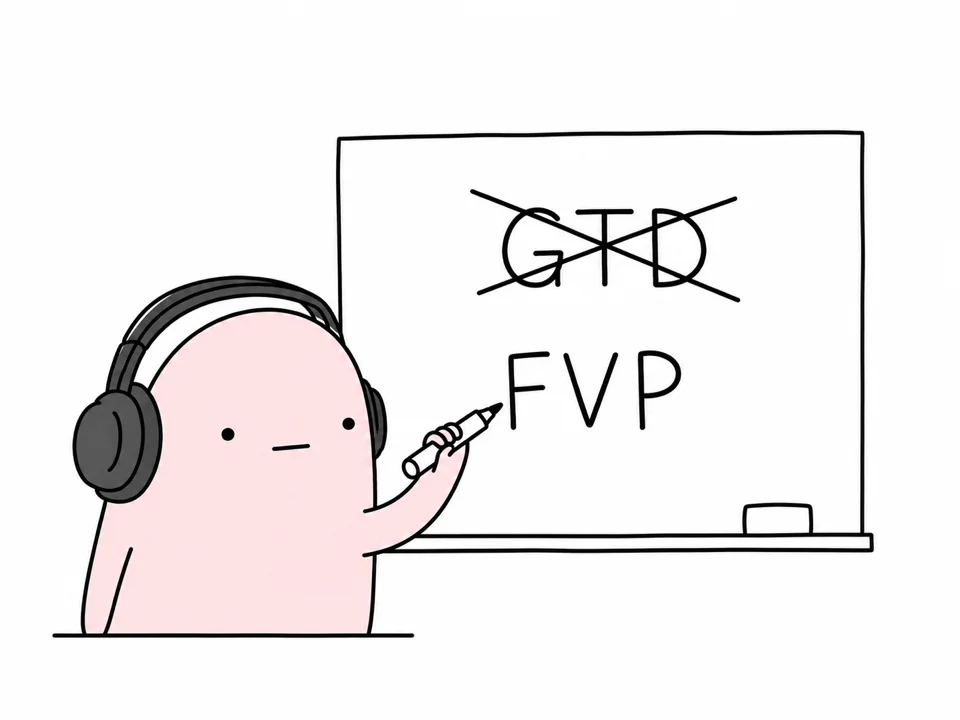
Mark Forster, a British time-management expert, spent his life refining a single system and arrived at the FVP method (Final Version Perfected). Instead of four quadrants — one list and one question: "Do I want to do this more than the previous task?"
You go down the list, compare tasks in pairs, and mark the ones you're drawn to more. The result is a chain of tasks chosen by desire, not by force. There's no resistance, because you just chose it yourself. The algorithm is broken down in detail in Why FVP Is the Smartest Way to Choose Tasks.
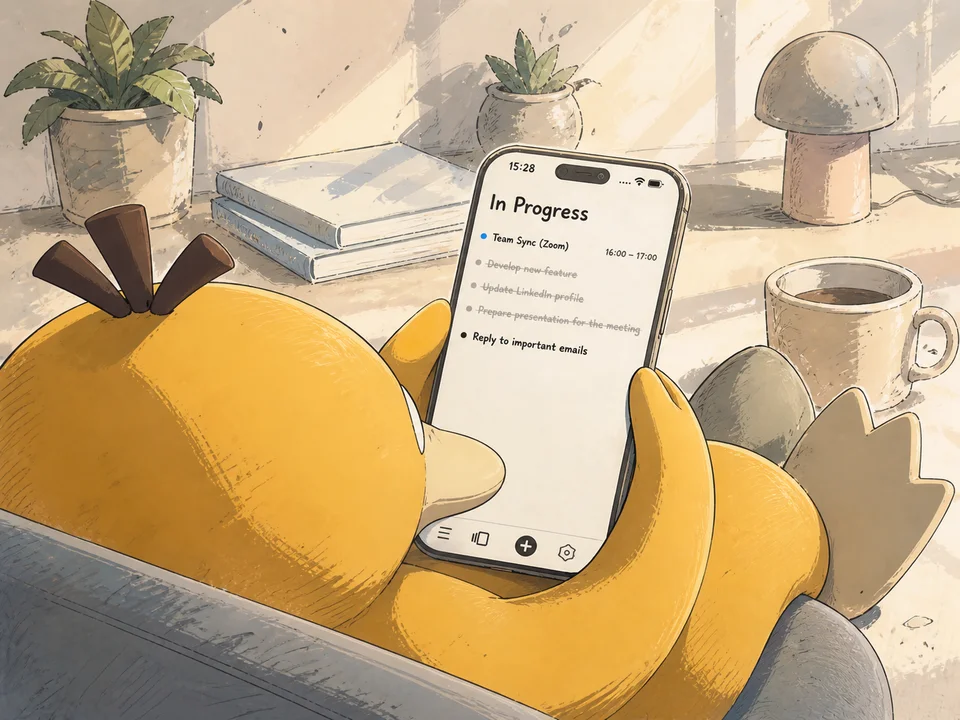
FVP doesn't reject Eisenhower's idea — it reaches the same second quadrant by a different route. Once the urgent fires are out, "want" naturally points to the important-but-not-urgent: the thing you kept postponing but are genuinely drawn to. No grid to redraw, and it adapts to your energy on the specific day.
Bottom line
The Eisenhower Matrix is a good tool for putting your head in order once and seeing that you live in firefighting mode. As a one-time diagnostic, it works great.
As a daily system it breaks on two things: everything feels important, and the grid has no idea how much energy you have today. If priorities won't stay inside the squares, try an approach that asks one question instead of sorting — and listens to your intuition.
Frequently Asked Questions
What is the Eisenhower Matrix in simple terms?
It's a grid of four cells you sort tasks into: important and urgent — do now, important but not urgent — schedule, urgent but not important — delegate, neither important nor urgent — delete. The method helps you separate genuinely important tasks from ones that merely press on you with urgency.
What's the difference between important and urgent?
Urgent demands attention right now (a ringing phone, a looming deadline) but doesn't necessarily move you toward your goals. Important moves you toward a meaningful result but often has no hard deadline. The main trap is reacting to the urgent while sacrificing the important.
Which quadrant in the Eisenhower Matrix is the most important?
The second — important but non-urgent tasks: health, learning, relationships, strategy. They have no deadline, so they're easy to postpone, yet they're what produces results over the long run. Worse, a neglected second-quadrant task eventually turns into a first-quadrant crisis.
Why doesn't the Eisenhower Matrix always work?
In practice almost everything feels important and urgent, so the first quadrant swells and the "what's more important" call still has to be made by hand. On top of that, the matrix has to be redrawn daily, and it doesn't account for how much energy you have today.
What can replace the Eisenhower Matrix?
Mark Forster's FVP method. Instead of four quadrants you keep one list and compare tasks in pairs by asking "Do I want to do this more than the previous one?" This removes manual sorting and adapts to your state on any given day.
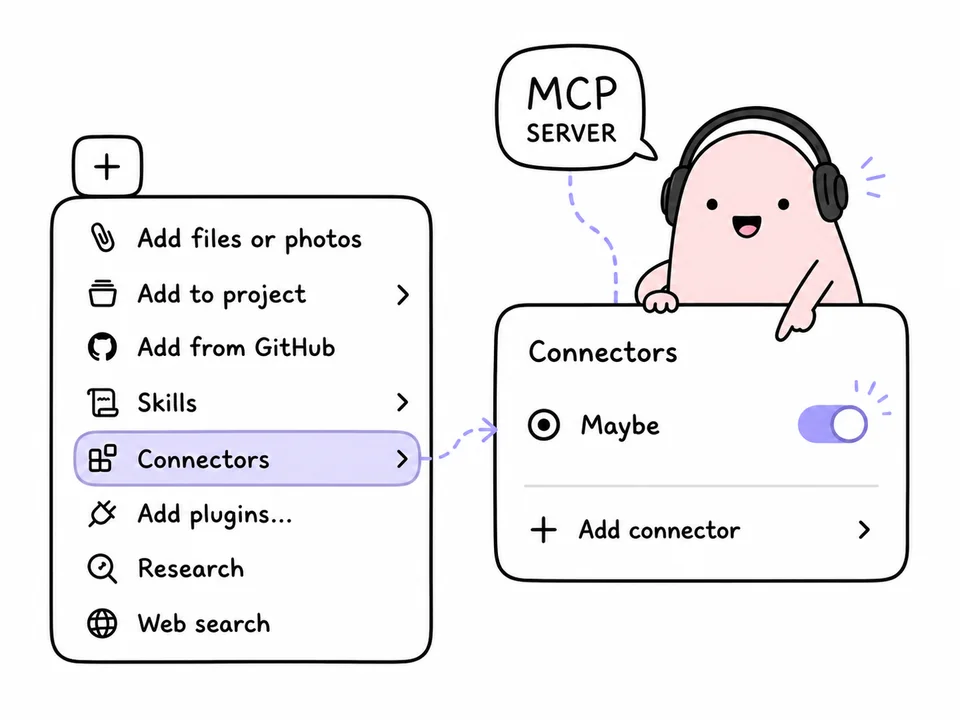
If the quadrants never hold up past the first week, Maybe is built on the FVP method. Instead of sorting by importance and urgency by hand, the app walks you through comparing tasks and builds a chain for the day that fits your energy. Try it in the browser or download it on iPhone — setup takes a couple of minutes.