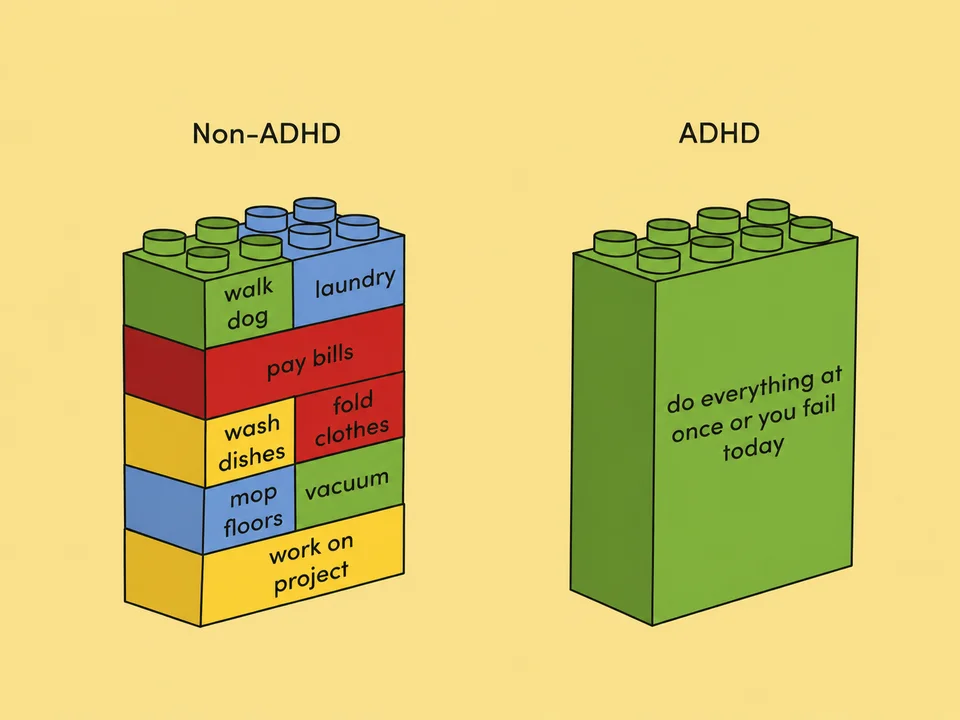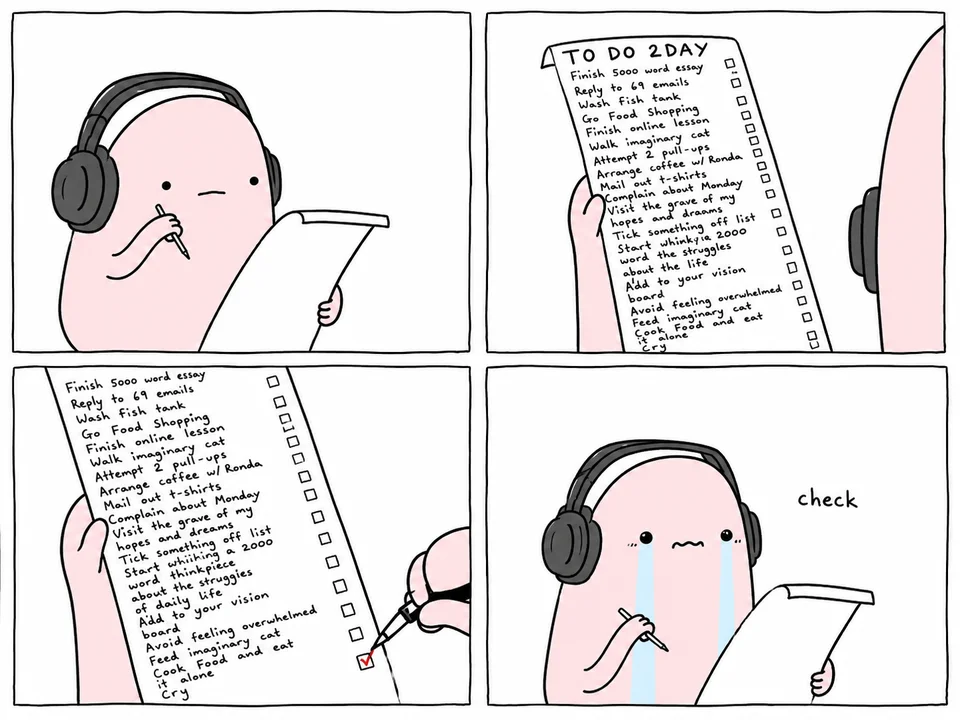
When you have no energy, opening your task list is already an effort in itself. You see twenty items, each demanding attention, and your brain simply refuses to choose. This isn't laziness or weak willpower — it's cognitive overload, and standard tools only make it worse. Maybe works differently: instead of showing you everything at once, it helps you find one specific action you're ready to take right now.
Why a Regular Task Manager Becomes the Problem
A standard task list is designed so that every item competes for your attention simultaneously. A project that stalled three weeks ago sits next to an email you need to send today and a meeting you need to prepare for tomorrow morning. When you're feeling fine, this works: you see the full picture and can prioritise. But on low-energy days, that same visual pressure becomes paralyzing. Your brain can't decide where to start, so it doesn't start at all.
For a long time I thought the problem was me, and I kept looking for ways to "pull myself together." Then I realised the problem was the tool: it shows too much at once and makes focus impossible.
One Question Instead of a Priority List
At the core of Maybe is the FVP method — Mark Forster's approach built on a single honest question: "Am I ready to do this right now, or that one instead?" Not "which is more important," not "which is more urgent" — just "which one am I ready for right now."
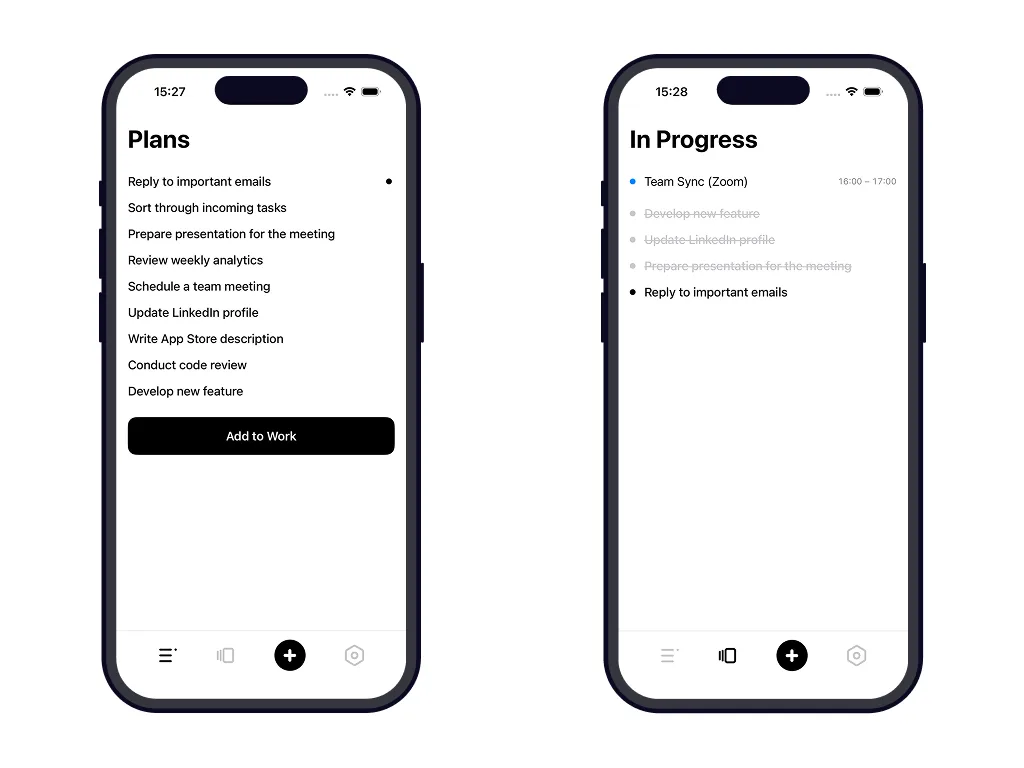
On a bad day I open Plans not to tackle everything, but simply to look through the list and find something — anything — I can handle. Sometimes that's one task, sometimes two. Send one message, close one tab, write one thought down. That counts as work, and it matters.
Forster wrote about this directly: your active list should only contain what is genuinely relevant today. Everything else creates an illusion of busyness and a very real sense of guilt.
Voice Instead of the Keyboard
On days without energy, typing is physically demanding — not because your hands stop working, but because finding the right words takes a disproportionate amount of the energy you don't have. In those moments I just speak out loud. I tap the microphone in Maybe and dictate a stream of consciousness: "need to call Anton about the contract, don't forget the design revisions, there was some idea about onboarding." No structure, no polished phrasing.
The AI pulls out three separate tasks from that and writes them up properly. I don't need to think about how to phrase things or where to put them. On low-energy days, small things like this are decisive — you either capture the thought or you lose it.
"Someday" Is Not Failure
I used to experience moving a task to later as admitting defeat. Now I think about it differently: the Someday section in Maybe exists precisely for days like these. You look at a task and honestly acknowledge — not today. You move it out of sight. The list gets shorter, and suddenly working with it feels possible again.
This isn't procrastination. It's an honest assessment of your resources. The task isn't going anywhere, but right now it's just in the way.
Why the Completion Sound Matters
Once you've picked two or three tasks and moved them to In Progress, that's all you see. No other list on screen, no visual noise. You do the first task, mark it done — and hear the familiar sound, like Apple Pay.
It sounds like a small detail, but in the moment when you have neither energy nor motivation, the haptic feedback and sound give your brain a clear signal: "you did it." After the first completed task, something shifts. Not always, but often the urge to do the next one appears — not because you have to, but because it just worked, and you want to feel that again.
The Bottom Line
Maybe doesn't cure burnout or turn a bad day into a productive one. But it removes one specific obstacle: the feeling that you need to do everything at once. You pick one thing. Then maybe one more. By your own choice, on your own terms.
On days without energy, that's the only approach that actually works: one honest choice, and then we'll see.
Frequently Asked Questions
What if I don't have the energy to even open the app?
Start with voice input — it has the lowest barrier to entry. Just say out loud whatever is running through your head, with no structure at all. Maybe will record it and break it into tasks. Sometimes the simple act of capturing your thoughts reduces anxiety enough that working becomes a little easier.
Won't the Someday section just turn into a pile of tasks I never come back to?
Some tasks might stay there — and that's fine. Forster described this as a "closed list": if a task sits in Someday for months without ever surfacing, it probably isn't actually needed. A quick weekly review (five minutes) lets you either pull a task back into your active list or delete it without guilt.
How does FVP help with cognitive overload?
FVP removes the need to evaluate your entire list at once. Instead, you answer one question: "Do I want to do this right now, or that one?" The brain handles pairwise comparison well even at low energy — unlike trying to rank twenty items simultaneously.
Why do the sound and haptic feedback matter when completing a task?
When energy is low, external reinforcement works better than internal motivation. The sound and vibration on task completion are a small dopamine signal the brain receives immediately. They help build a loop — "did it → got feedback → want to do it again" — which is especially valuable on days when internal motivation is almost gone.
If today happens to be one of those days — open Maybe and find one task you feel even the slightest readiness for. Not a full day's plan, not a system. Just one choice. You can do it right in the browser or on your iPhone.