Most task managers treat us like machines. They ask for hard deadlines, complex tags, and "priority levels" that change every hour. We've all been told to "eat the frog" first thing in the morning, but usually, that just leads to procrastination and burnout before lunch.
I wanted something different. I wanted a system that works with human psychology, not against it. That's when I discovered Mark Forster's FVP (Final Version Perfected).
The Science of "Want"
Mark Forster spent decades refining productivity systems. FVP is his "final version" — the most polished iteration of his work.
The core insight is simple: We are most effective when we do what we actually feel like doing right now.
I started practicing this on paper. The results were so immediate — the mental resistance just vanished — that I knew I had to build an app for it. That's how Maybe was born.
How It Works: The Power of Comparison
In Maybe, we ditch the complex filters. It all starts with a Brain Dump.
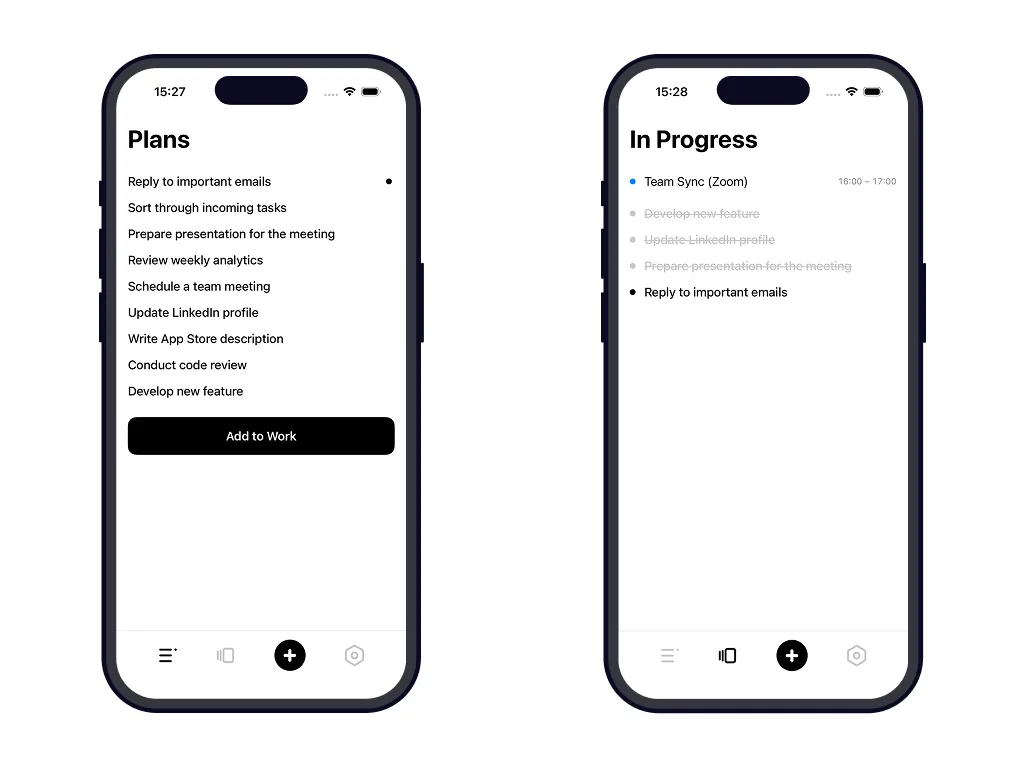
- Clear your head. Throw every task, idea, and chore into one big list. No sorting, no pressure.
- The "Maybe" Logic. The app takes the first task as your "base."
- The Chain. You look at the next task and ask yourself: "Do I want to do this MORE than the base task?"
If the answer is yes, that task becomes your new base. You keep going until you've built a "chain" of tasks for the day — all chosen by genuine interest.
When you hit "Start," the list is ready. You begin your day with the task you are most genuinely interested in.
Why This Is a Game Changer
By moving through your day on a wave of interest rather than obligation, you eliminate friction. You aren't fighting yourself to get things done — you're just following your natural momentum.
I use Maybe every single day. Some days, I breeze through 2 or 3 of these chains without that typical "end-of-day" exhaustion. It's not just about doing more — it's about feeling better while doing it.
Frequently Asked Questions
What is the FVP method?
FVP (Final Version Perfected) is a time management method by Mark Forster. Instead of setting priorities, you compare tasks pairwise, asking "Do I want to do this more than the previous task right now?" The result is a chain of tasks chosen by genuine interest, not obligation.
How is FVP different from a regular to-do list?
A regular list requires willpower — you force yourself to do "the most important thing." FVP removes this resistance. You always do what you actually feel like doing right now. Productivity grows through flow, not through force.
Is Maybe suitable for beginners with no time management experience?
Yes. Maybe is specifically designed for people who struggle with traditional planners. There are no complex settings — you start with a Brain Dump and see results immediately.
I built Maybe to solve exactly the problem described in this article. The FVP method is baked right into the interface — try planning your first day on a wave of want, not obligation.